In the first quarter of 2026, condo pricing on Siesta Key closed a gap that had been narrowing for five years. Condos sold for a median of $690 per square foot, within a rounding error of the $698 single-family homes commanded in the same window. On paper, that looks like proof that condos have caught up to houses as a store of value on the island.
It isn't proof of that. It's proof that the per-square-foot number is hiding the one figure that actually predicts what a condo will cost you after closing: the building's reserve funding percentage. That number doesn't appear on the listing. It doesn't appear in the MLS sheet your agent pulls up. It shows up in board minutes, a reserve study, and an estoppel certificate, usually somewhere in the middle of your due diligence period, sometimes closer to the end than anyone wants.
The Listing Price Isn't Pricing What You Think It's Pricing
Look past the median and the picture on Siesta Key splits into two markets wearing the same zip code. Active inventory sat at 241 condos as of March 31, 2026, against 148 single-family homes, both moving at an average of roughly 100 days on market. Condos closed at a 95 percent list-to-sold ratio for the quarter, and closed sales nearly doubled from the same period a year earlier. That reads as a healthy, liquid market, and for a meaningful share of the inventory, it is.
The other share is why the average exists at all. Mid-rise buildings along Midnight Pass Road were showing price declines of 10 to 20 percent year over year through the spring, with longer marketing times than the rest of the island. Meanwhile buildings that had already cleared their Structural Integrity Reserve Study and funded their reserves were pricing closer to list. Same island, same beach, same quartz sand, and a pricing gap that has nothing to do with square footage or view and everything to do with where a building sits in a compliance cycle that most buyers never think to ask about.
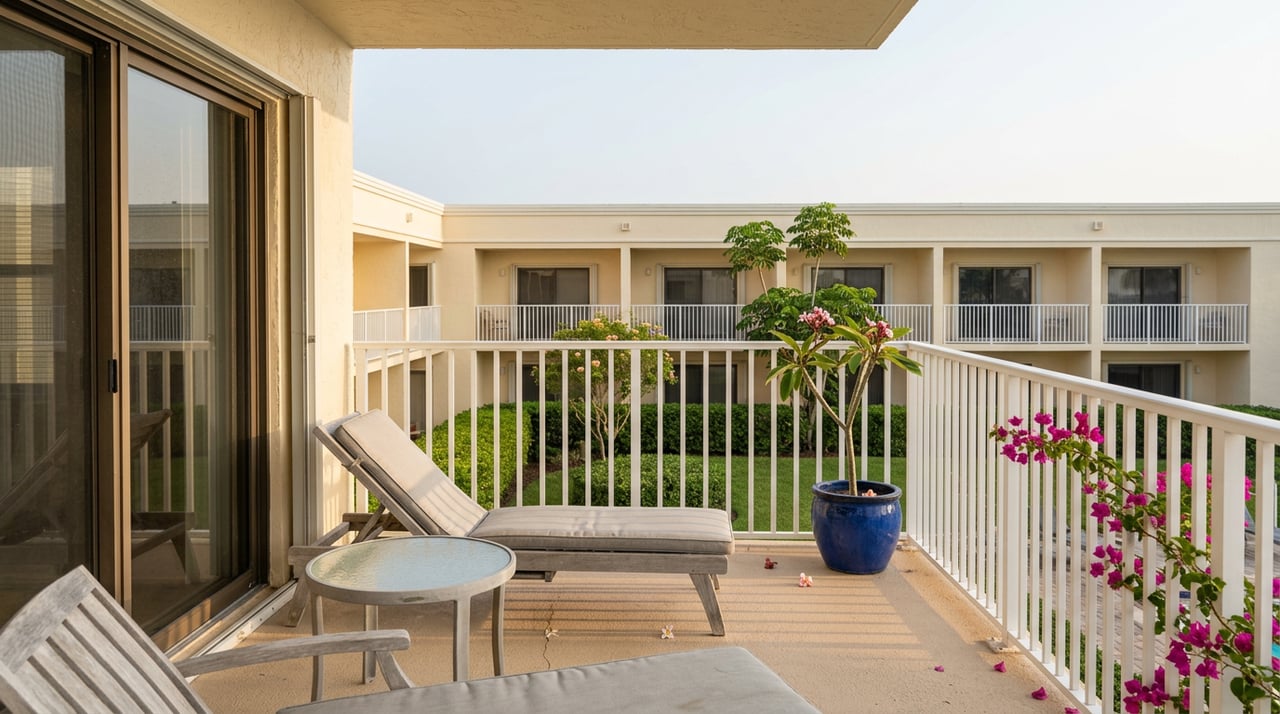
Siesta Key's condo stock spans everything from Gulf-front buildings to quieter bayside communities with private fishing piers and Intracoastal sunrises. That range in setting is part of the island's appeal. It's also part of why a single median price per square foot tells you almost nothing about what any specific building will cost you to own for the next five years.
Every Older Building Is Racing the Same Deadline
The reason this split exists traces back to Senate Bill 4-D, passed in 2022 after the Surfside collapse, and refined since by Senate Bill 154 and House Bill 1021. Together they require condominium and cooperative buildings three stories or taller to complete a milestone structural inspection once a building reaches 30 years of age, or 25 years if it sits within a few miles of the coast, and to repeat that inspection every decade after. Separately, and on its own 10-year clock, those same buildings must complete a Structural Integrity Reserve Study covering eight specific structural components: everything from the roof and load-bearing walls to plumbing and fireproofing.
Florida's Division of Condominiums, Timeshares and Mobile Homes has set December 31, 2026 as the outside deadline for associations completing a SIRS alongside a required milestone inspection, and January 1, 2026 as the date associations that previously waived reserve funding had to start funding it for real. House Bill 913, effective July 1, 2025, gave boards a narrow release valve, allowing a temporary pause or reduction in reserve contributions for up to two budget years immediately after a milestone inspection. It didn't remove the obligation. It just moved some of it around.
Miss the milestone deadline and the consequences escalate quickly: fines that can run $500 a day, referral to a construction board of adjustment, and in the most serious cases a vacate order that forces residents out while repairs happen. No Siesta Key board wants that outcome, which means the associations that haven't already funded their reserves are working through it now, on a clock that runs out before the end of this year.
The Percentage That Predicts Your Next Five Years
Here's the mechanism that the listing price can't show you. Reserve funding below roughly 30 percent of a building's projected structural needs is the threshold most lenders and industry analysts treat as the tipping point toward a special assessment. Below that line, a board is far more likely to come back to owners for a lump-sum payment when a roof, elevator, or seawall needs attention on a timeline the reserve fund can't cover.
On Siesta Key, that gap shows up as real dollars. Typical special assessments run $2,000 to $10,000 per unit for routine capital projects. In older or thinly reserved buildings, especially the 1970s-era beachfront towers that make up a meaningful share of the island's condo stock, assessments have run $25,000 to $60,000 or more per unit for concrete restoration and structural repair. Layer on a hurricane, and the master policy's wind deductible, often $25,000 to $100,000 or higher, gets divided among owners as its own assessment, separate from and on top of any structural work.
Reserve health affects more than your wallet at closing. Buildings with reserves funded below roughly 10 percent of operating needs, active litigation, or a heavy concentration of short-term rental units can be flagged as non-warrantable by conventional lenders, which shrinks your buyer pool to cash and portfolio-loan buyers alone, both at purchase and when you eventually sell.
Florida law gives buyers a way to see this before it becomes a surprise. Associations must provide an estoppel certificate confirming any pending or approved assessments, and owners are entitled to at least 14 days' notice before a new special assessment is approved. The documents that actually reveal the number that matters are:
- The most recent Structural Integrity Reserve Study and its funding schedule
- Two years of board meeting minutes, where assessment discussions surface before a vote
- Current master insurance declarations, both wind and flood
- The estoppel certificate, confirming whether anything is pending right now
- Written confirmation from the association or its management company on warrantable financing status
None of this lives in the listing description. Your agent has to request it directly from the association, and the earlier in your contract timeline that happens, the more leverage you have if something turns up.
Why the Discount Isn't Always a Discount
This is where the per-square-foot convergence becomes misleading in a specific way. A 1980s beachfront unit priced meaningfully below a comparable newer building looks like value. Sometimes it is. Sometimes the discount is the market already pricing in an assessment that hasn't been formally announced yet, the seller and listing agent both aware, the buyer finding out only once the reserve study lands in their inbox.
There's a second layer working in the same direction. Following the 2024 storm season, FEMA elevation standards reset for a number of Siesta Key buildings. Properties that already meet current elevation requirements are commanding a premium, while older buildings operating under grandfathered standards are seeing softer demand, another reason two condos with identical square footage and nearly identical list prices can carry very different real costs of ownership.
What This Means If You're Writing an Offer This Year
The practical shift for 2026 is this: stop treating building age as the risk signal and start treating the reserve funding percentage as the risk signal. A newer building with a poorly funded reserve can surprise you just as easily as a 1970s tower, since the SIRS obligation applies by height, not age, and applies to every qualifying building regardless of when it was built.
Ask for the reserve study and the last two years of minutes in your first conversation about a specific building, not after you've written an offer. Confirm where that building sits in its milestone and SIRS timeline before you fall in love with the view. And work with someone who tracks these documents building by building, because on Siesta Key in 2026, the island-wide median is close to useless and the building-specific number is the whole story.
FAQ
Does my single-family home on Siesta Key need a milestone inspection or SIRS? No. Both requirements apply only to condominium and cooperative buildings three or more habitable stories in height. Single-family homes, villas, and townhomes governed by a standard HOA are not subject to either mandate.
What's the actual difference between a milestone inspection and a SIRS? A milestone inspection is a structural safety assessment performed by a licensed architect or engineer, triggered by a building's age. A Structural Integrity Reserve Study is a financial planning document that determines how much an association needs to save, and by when, to maintain eight specific structural components. Many boards schedule them together to save on engineering costs, but they remain two separate legal requirements.
Can I still get financing on a condo with a pending special assessment? Sometimes, but expect friction. Lenders scrutinize reserve funding levels and pending assessments closely, and a building that's non-warrantable due to underfunded reserves, active litigation, or heavy short-term rental use will limit you to cash or specialized portfolio financing, which also narrows your resale pool later.
If you're weighing a specific Siesta Key building right now, the fastest way to know what you're actually buying is to have someone pull the reserve study and board minutes before your inspection period runs out, not after. Jennifer Linehan Group reviews those documents building by building as part of every Siesta Key condo search, so the number that matters shows up before you're under contract, not three days before you close. Get a Free Home Valuation to start the conversation.